


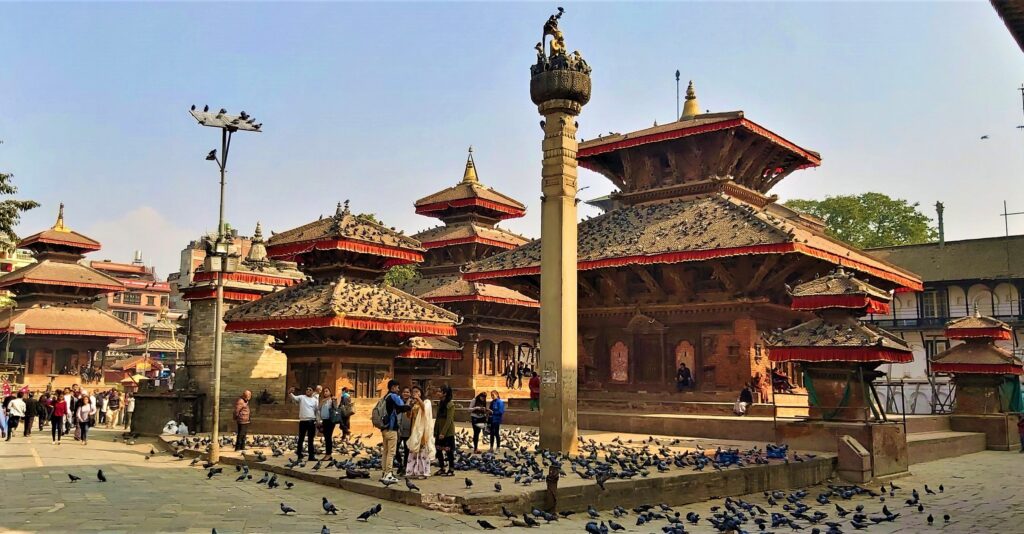
Kathmandu Durbar Square (UNESCO World Heritage Site): Located in the heart of the capital city, also known as Hanuman Dhoka. The name Hanuman Dhoka came from the statue of Hanuman at the entrance of the royal palace, established by the King Pratap Malla in 1672 A.D. Storied residence built by King Prithvi Narayan shah in 1770, is called Basantapur Durbar.
The Main attractions of Kathmandu Durbar Square are: Shiva-Parvati Temple, Basantapur Durbar Palace, Kalbhairav (the god of destruction), Taleju temple (built by King Mahendra Malla in 1549 A.D), Jagannath Temple, Big Bell, Swet Bhairav (It is kept hidden inside a wooden curtain throughout the year and taken out only during the festival of Indra Jatra) and Kumari Temple: The word Kumari is derived from the Sanskrit Kaumarya, meaning “princess“, also known as living Goddess. Kumari is a pre-pubescent girl selected from the caste – Shakya or Bajracharya clan of the Nepalese Newari community. The Kumari is revered and worshipped by Hindus as well as Buddhists in Nepal. The temple or the residence of Living goddess, Kumari, is situated in the vicinity of Hanuman Dhoka Palace. The building has profusely carved wooden balconies and window screens. The Kumari, acknowledges the greetings from her balcony window. Photography is prohibited.

Best Travel & Tours Company in Kathmandu Nepal.


©2023. Swornim Tours & Travel (p) Ltd .. All Rights Reserved.